Ngo Mon Gate – The Majestic Main Entrance to the Imperial City of Hue
Ngo Mon is one of the most iconic landmarks of the ancient imperial capital of Hue. Built in 1833 during the reign of Emperor Minh Mang, it served as the main southern entrance to the Imperial City. The gate is famous for its five passageways and the magnificent two-tiered Lau Ngu Phung pavilion above, supported by 100 precious ironwood columns. In the past, the central entrance was reserved exclusively for the emperor, while the other passageways were assigned according to the ranks and positions of court officials.
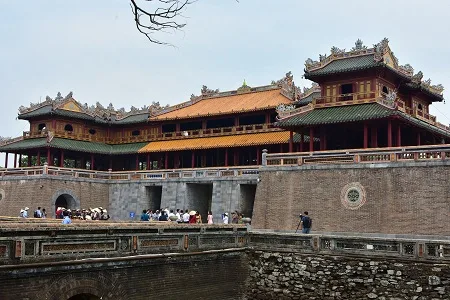
Ngo Mon Gate (午門) is the main southern entrance to the Imperial City of Hue and one of the most remarkable architectural landmarks of the Nguyen Dynasty. More than just an entrance to the Imperial Palace, Ngo Mon symbolizes royal authority, the sophisticated architectural skills and the artistic achievements of Vietnamese craftsmen in the early 19th century.
History of Construction
1804: During the reign of Emperor Gia Long, an important southern gate of the Imperial City was built and named Nam Khuyet Dai.
1833: Emperor Minh Mang carried out a major expansion and reconstruction of the Imperial City of Hue. Ngo Mon Gate was built during this period and took on the appearance that visitors can admire today.
During the Nguyen Dynasty: Ngo Mon served as the setting for many important royal ceremonies, major celebrations and significant national events.
1945: Ngo Mon witnessed one of the most important events in modern Vietnamese history. On August 30, 1945, Emperor Bao Dai formally abdicated and handed over the royal seal and sword to representatives of the revolutionary government, marking the end of the Vietnamese monarchy.
Today, Ngo Mon is an important part of the Complex of Hue Monuments, which was recognized by UNESCO as a World Cultural Heritage Site in 1993.
The Unique Architecture of Ngo Mon Gate
Ngo Mon features a distinctive architectural design combining a massive stone-and-brick platform at the bottom with an elegant wooden pavilion above. This creates a structure that is both strong and graceful.
The Lower Platform
Constructed mainly from bricks and stone, using traditional building materials and techniques to create a solid foundation.
It has five passageways running through the gate, with the central entrance reserved exclusively for the emperor.
The two inner side gates were designated for civil and military mandarins, while the two outer gates were used by soldiers, elephants, horses and accompanying royal processions according to court regulations.
Lau Ngu Phung – The Five-Phoenix Pavilion
Above the gate stands Lau Ngu Phung, a magnificent wooden pavilion featuring two levels of roofs and several interconnected sections arranged in a harmonious architectural composition.
The name Ngu Phung means "Five Phoenixes", symbolizing nobility, elegance and royal magnificence.
The pavilion is distinguished by several architectural features:
A strong structural system supported by precious ironwood columns.
Roofs covered with traditional yellow and green glazed tiles, creating the distinctive colors of imperial architecture.
Exquisite decorations featuring dragons, phoenixes and intricate patterns inspired by the royal court.
Gracefully curved roof edges that create an elegant and balanced appearance.
Ngo Mon represents a harmonious combination of traditional Vietnamese construction techniques, Eastern architectural philosophy and the refined decorative arts of the Nguyen royal court.
Cultural and Historical Significance
Ngo Mon is much more than an ordinary city gate. It carries several important cultural and historical meanings:
Royal Authority: The central entrance was reserved exclusively for the emperor, reflecting the strict hierarchy and ceremonial traditions of the royal court.
Eastern Philosophy: The southern direction was traditionally regarded as the direction of emperors, symbolizing light, authority and the responsibility to govern the kingdom.
Royal Architecture: The combination of a solid brick-and-stone platform and an elegant multi-roofed wooden pavilion demonstrates the remarkable craftsmanship of Vietnamese artisans.
A Witness to History: Ngo Mon has witnessed many important historical events, including Emperor Bao Dai's abdication on August 30, 1945.
Vietindo Travel