The Town of Sapa
Sa Pa is a quiet mountain town and home to a great diversity of ethnic minority peoples.Most tourists agree that it would be regretful if the leisure and relaxation time in cool and fresh weather is not accompanied by visiting trips to Sapa’s prideful natural beauty spots
Sa Pa,or Sapa, is a frontier town and capital of Sa Pa District in the Lao Cai province in northwest Vietnam. It is one of the main market towns in the area, where several ethnic minority groups such as Hmong, Dao (Yao), Giay, Pho Lu, and Tay live.
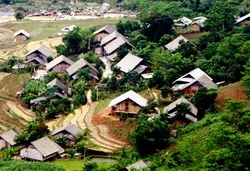
 It is most likely that Sa Pa was first inhabited by highland minorities of the Hmong and Yao groups, as well as by smaller numbers of Tày and Giay. These are the four main minority groups still present in Sa Pa district today. The Kinh (lowland Vietnamese) never originally colonised this highest of Việt Nam’s valleys, which lies in the shadow of Phan-Xi-Pǎng (Fansipan, 3143 meters), the highest peak in the country.
Sa Pa District is located in Lao Cai Province, north-west Vietnam, and 350 km north-west of Hanoi, close to the border with China. The Hoang Lien Son range of mountains dominates the district, which is at the eastern extremity of the Himalayas. This range includes Vietnam's highest mountain, Fan Si Pan, at a height of 3142m above sea level. The town of Sa Pa lies at an altitude of about 1600 m. The climate is moderate and rainy in summer (May—August), and foggy and cold with occasional snowfalls in winter.
Sa Pa is a quiet mountain town and home to a great diversity of ethnic minority peoples. The total population of 36,000 consists mostly of minority groups. Besides the Kinh (Viet) people (15%) there are mainly 5 ethnic groups in Sapa: Hmong 52%, Dao 25%, Tay 5%, Giay 2% and a small number of Xa Pho. Approximately 7,000 live in Sapa, the other 36,000 being scattered in small communes throughout the district.
Most of the ethnic minority people work their land on sloping terraces since the vast majority of the land is mountainous. Their staple foods are rice and corn. Rice, by its very nature of being a labour intensive crop, makes the daily fight for survival paramount. The unique climate in Sapa has a major influence on the ethnic minorities who live in the area. With sub-tropical summers, temperate winters and 160 days of mist annually, the influence on agricultural yields and health related issues are significant.
The minority people can only yield one crop of rice annually, which leads to food shortfalls in many communes at specific times. This shortage of food contributes to malnutrition and other related health problems. The climatic conditions also contribute to many health issues including coughs, colds, and bronchial and respiratory problems that are commonplace throughout the community. Illiteracy is prevalent. Sapa O'Chau is a grassroots project working to address these problems.
The scenery of the Sapa region in large part reflects the relationship between the ethnic minority people and nature. This is seen especially in the paddy fields carpeting the rolling lower slopes of the Hoang Lien Mountains. The impressive physical landscape, which underlies this, has resulted from the work of the elements over thousands of years, wearing away the underlying rock.
Most tourists agree that it would be regretful if the leisure and relaxation time in cool and fresh weather is not accompanied by visiting trips to Sapa’s prideful natural beauty spots, such as Ham Rong Mountain, Silver Waterfall, Rattan Bridge, Bamboo Forest and Ta Phin Cave. The town is also the starting point for many mountain climbers and scientists who would like to discover the Fansipan Mount, the highest mountain in Vietnam with 3,143 m height. Can you imagine that Hoang Lien Mountain Range is called “the Alps of the North Sea area” since Fansipan Mount also marks its greatest height among others in the Indochina Peninsula as well. The pyramid-shaped mountain is covered with clouds all the year round. On top of the mountain is filled with frequent below zero temperature, especially at high altitudes.
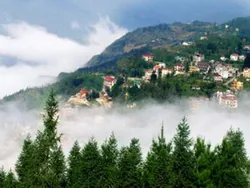
On approaching the town, the very first thing tourists may find is the detached wooden mansions and villas perched on top or side of the hills, behind thick pine forests, hided by fog in the morning. Old and new villas with red roofs now appear and then disappear in the green rows of pomu trees, bringing in the beauty of European towns.
 Foreign tourists are actually fond of scarce and precious specialties of Sapa, such as forest’s product, handicrafts, delicacies (smoked meat, “thang co”, “cai meo”, san lung wine, corn wine, etc.), typical of ethnic minority people.
Most travellers do like to bring some of the local fresh vegetables back home for presents. Thanks to the fresh and cool air, Sapa is the ideal land for fresh temperate vegetables such as cabbage, chayote, precious medical herbs, fruit trees (plum, pear), and so on.
Sapa is famous for its special cultural diversity in a combination of ethnic minority groups’ culture. Visitors to Sapa will have opportunities to discover the unique customs of the local residents. Local markets are the town’s typically cultural element, which are always crowded and joyful, attracting hundreds of visitors. This is the common place for minority groups to gather and exchange goods.
Market sessions are also a chance for local people to promenade. No foreign visitor could help joining such a market session, a typical cultural element of Sapa. What is more, tourists coming to Sapa at weekends have the great chance to learn about local ethnic people's courtship and martial life, through the Sapa love market and wife kidnapping ceremony of the H’Mong group. The ceremony will begin on April 29th. This is part of a five-day festival, titled Festival on the Cloud, to mark the beginning of the Sapa 2006 tourism year, in the northern mountain township of Sapa, in Lao Cai Province.
Sa Pa District is located in Lao Cai Province, north-west Vietnam, and 350 km north-west of Hanoi, close to the border with China. The Hoang Lien Son range of mountains dominates the district, which is at the eastern extremity of the Himalayas. This range includes Vietnam's highest mountain, Fan Si Pan, at a height of 3142m above sea level. The town of Sa Pa lies at an altitude of about 1600 m. The climate is moderate and rainy in summer (May—August), and foggy and cold with occasional snowfalls in winter.
Sa Pa is a quiet mountain town and home to a great diversity of ethnic minority peoples. The total population of 36,000 consists mostly of minority groups. Besides the Kinh (Viet) people (15%) there are mainly 5 ethnic groups in Sapa: Hmong 52%, Dao 25%, Tay 5%, Giay 2% and a small number of Xa Pho. Approximately 7,000 live in Sapa, the other 36,000 being scattered in small communes throughout the district.
Most of the ethnic minority people work their land on sloping terraces since the vast majority of the land is mountainous. Their staple foods are rice and corn. Rice, by its very nature of being a labour intensive crop, makes the daily fight for survival paramount. The unique climate in Sapa has a major influence on the ethnic minorities who live in the area. With sub-tropical summers, temperate winters and 160 days of mist annually, the influence on agricultural yields and health related issues are significant.
The minority people can only yield one crop of rice annually, which leads to food shortfalls in many communes at specific times. This shortage of food contributes to malnutrition and other related health problems. The climatic conditions also contribute to many health issues including coughs, colds, and bronchial and respiratory problems that are commonplace throughout the community. Illiteracy is prevalent. Sapa O'Chau is a grassroots project working to address these problems.
The scenery of the Sapa region in large part reflects the relationship between the ethnic minority people and nature. This is seen especially in the paddy fields carpeting the rolling lower slopes of the Hoang Lien Mountains. The impressive physical landscape, which underlies this, has resulted from the work of the elements over thousands of years, wearing away the underlying rock.
Most tourists agree that it would be regretful if the leisure and relaxation time in cool and fresh weather is not accompanied by visiting trips to Sapa’s prideful natural beauty spots, such as Ham Rong Mountain, Silver Waterfall, Rattan Bridge, Bamboo Forest and Ta Phin Cave. The town is also the starting point for many mountain climbers and scientists who would like to discover the Fansipan Mount, the highest mountain in Vietnam with 3,143 m height. Can you imagine that Hoang Lien Mountain Range is called “the Alps of the North Sea area” since Fansipan Mount also marks its greatest height among others in the Indochina Peninsula as well. The pyramid-shaped mountain is covered with clouds all the year round. On top of the mountain is filled with frequent below zero temperature, especially at high altitudes.
On approaching the town, the very first thing tourists may find is the detached wooden mansions and villas perched on top or side of the hills, behind thick pine forests, hided by fog in the morning. Old and new villas with red roofs now appear and then disappear in the green rows of pomu trees, bringing in the beauty of European towns.
Most travellers do like to bring some of the local fresh vegetables back home for presents. Thanks to the fresh and cool air, Sapa is the ideal land for fresh temperate vegetables such as cabbage, chayote, precious medical herbs, fruit trees (plum, pear), and so on.
Sapa is famous for its special cultural diversity in a combination of ethnic minority groups’ culture. Visitors to Sapa will have opportunities to discover the unique customs of the local residents. Local markets are the town’s typically cultural element, which are always crowded and joyful, attracting hundreds of visitors. This is the common place for minority groups to gather and exchange goods.
Market sessions are also a chance for local people to promenade. No foreign visitor could help joining such a market session, a typical cultural element of Sapa. What is more, tourists coming to Sapa at weekends have the great chance to learn about local ethnic people's courtship and martial life, through the Sapa love market and wife kidnapping ceremony of the H’Mong group. The ceremony will begin on April 29th. This is part of a five-day festival, titled Festival on the Cloud, to mark the beginning of the Sapa 2006 tourism year, in the northern mountain township of Sapa, in Lao Cai Province.
Source: vietnamtourism